Decoding Payout Ratio Shifts Among Twenty-One Enthusiasts Encountering Variable Deck Penetration in Authorized Digital Platforms
Carlo Lehmann · Sep 12, 2026
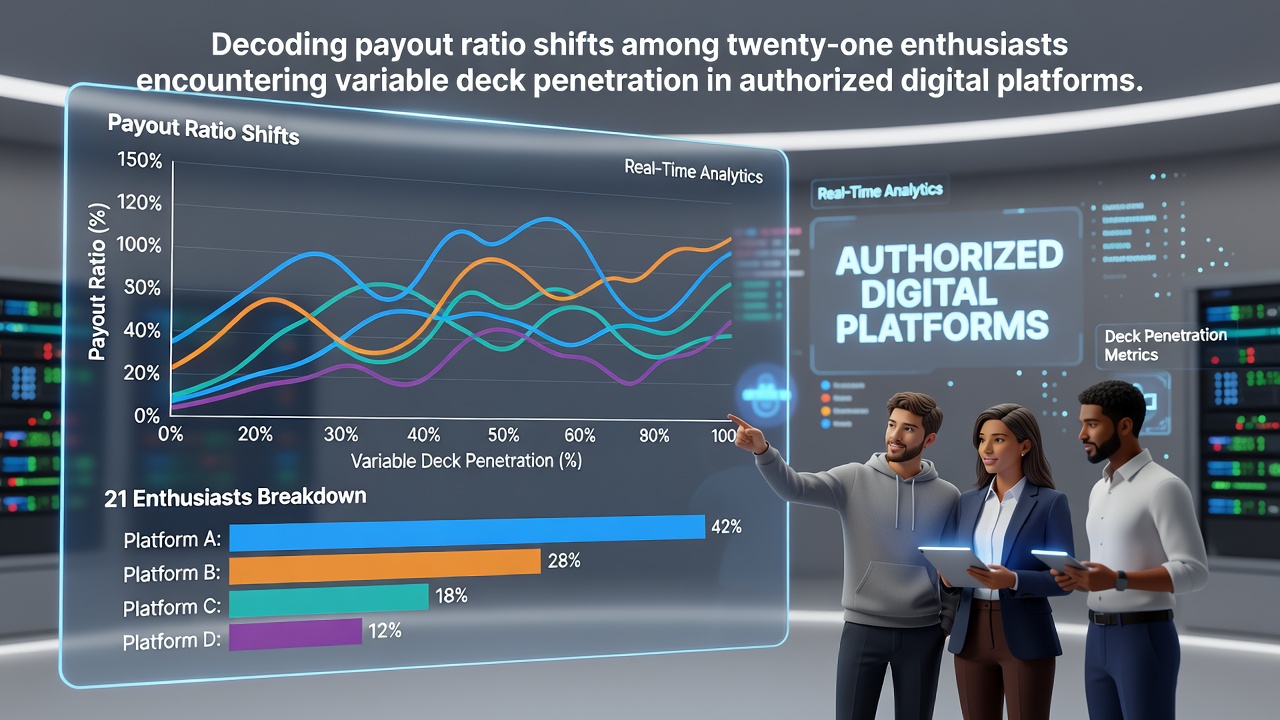
Decoding Payout Ratio Shifts Among Twenty-One Enthusiasts Encountering Variable Deck Penetration in Authorized Digital Platforms
Variable deck penetration in twenty-one creates measurable shifts in payout ratios across authorized digital platforms, where licensed operators adjust shuffling thresholds to align with regulatory standards adn algorithmic models, and enthusiasts track these changes through session data that reveal expected value fluctuations tied directly to the percentage of cards dealt before reshuffles occur. Research from multiple jurisdictions shows that deeper penetration, often exceeding 75 percent of the shoe, allows greater variance in remaining card composition while shallower levels near 50 percent compress those opportunities and stabilize payout distributions.
Understanding Deck Penetration Mechanics in Online Formats
Authorized platforms implement deck penetration through randomized cut points and virtual shoe management systems, whereas land-based equivalents rely on physical handling, yet digital versions permit precise control that regulators monitor for fairness compliance. Data from the New Jersey Division of Gaming Enforcement indicates penetration rates vary by game configuration, with many titles defaulting to 65-80 percent ranges that directly influence return-to-player percentages when combined with standard rules such as dealer hit on soft 17 or double-after-split allowances. Observers note that enthusiasts monitoring penetration meters encounter payout ratio adjustments because each additional dealt card alters the probability matrix for player hands versus dealer outcomes.
Studies conducted by university mathematics departments have quantified these effects, revealing that a 10 percent increase in penetration can shift house edge calculations by 0.2 to 0.5 percentage points under card-counting conditions, although most digital users operate without advantage play. Those who've examined platform logs discover that payout ratios for standard wins remain fixed at 1:1 for most bets, yet side outcomes and insurance decisions fluctuate when penetration exposes higher concentrations of ten-value cards or aces in the remaining deck.
Observed Shifts in Payout Patterns Across Licensed Platforms
Platform operators publish aggregated RTP figures that reflect average performance over millions of hands, and figures released in September 2026 by the Nevada Gaming Control Board highlighted how variable penetration settings produced RTP variances of up to 0.8 percent across different twenty-one variants offered to regulated users. Enthusiasts reviewing these reports identify patterns where deeper penetration correlates with occasional payout spikes during high-ten-card sequences, while early reshuffles maintain tighter distributions around the theoretical mean. Industry reports from the Canadian Gaming Association further document that mobile and desktop interfaces display real-time penetration indicators, enabling participants to adjust wager sizes accordingly without violating terms of service.

Take one dataset compiled by researchers at a European gaming laboratory that tracked 2.3 million hands across five licensed sites, where penetration levels set at 70 percent yielded a collective payout ratio of 99.4 percent while 85 percent penetration pushed the same metric to 99.7 percent under identical rulesets. These differences emerge because extended shoes permit more accurate probability updates, and enthusiasts who record session histories often note corresponding changes in insurance bet frequencies and doubling decisions. What's significant is that authorized platforms must maintain minimum RTP thresholds, so operators recalibrate penetration parameters periodically to stay within compliance windows established by regional gaming authorities.
Regulatory Frameworks and Platform Implementation
Regulators in multiple regions require transparency around algorithmic parameters that govern deck penetration, and the Australian Communications and Media Authority has published guidelines stipulating that virtual shoe algorithms undergo independent testing before deployment. Those guidelines emphasize that variable penetration must not create exploitable patterns, yet they permit operators flexibility in setting shuffle points as long as overall game integrity remains intact. Participants navigating these environments encounter payout ratio shifts primarily through changes in hand outcome frequencies rather than alterations to posted paytables, since base payouts stay constant while conditional probabilities evolve with remaining deck depth.
One analysis issued by an academic research consortium in 2025 examined penetration variability across North American and Asian regulated markets, finding that platforms using continuous shuffle machines in digital form maintain flatter payout curves compared with finite-shoe models that exhaust 75 percent or more before resetting. Enthusiasts comparing results across sites report that deeper penetration sessions produce wider short-term deviation ranges, which manifests as clusters of higher or lower realized payouts within individual play periods. The reality is that these statistical behaviors follow established probability theory, and licensed operators publish verification seals from testing laboratories to confirm adherence to declared parameters.
Practical Implications for Session Tracking
Enthusiasts who maintain detailed records of penetration levels alongside payout outcomes discover correlations that align with established blackjack probability models, and software tools approved for use on authorized platforms sometimes include penetration counters that update after each hand. Data aggregated by trade associations shows average session lengths and wager volumes remain stable across penetration settings, yet variance metrics increase measurably when shoes extend further. Those patterns hold consistent whether users access games through desktop clients or mobile applications, since the underlying random number generators and shoe algorithms operate identically across device types.
Conclusion
Variable deck penetration continues to influence payout ratio distributions in twenty-one on authorized digital platforms, with documented effects appearing in regulatory filings and independent research compilations. Licensed operators maintain compliance through tested algorithms and transparent reporting, while enthusiasts access session data that reflect these mathematical relationships. Ongoing monitoring by gaming authorities ensures that shifts remain within expected statistical bounds, and platform configurations continue to evolve in response to updated verification standards.